Showing posts with label Moody Blues. Show all posts

Thursday, December 24, 2020

25 Greatest Songs of The Moody Blues (and a few by Justin Hayward)

The Moody Blues have long been one of my favorite bands. With in this blog post you will discover when I first became a fan and other little fascinations I had/have with The Moody Blues (and Justin Hayward).


25 Greatest Songs of The Moody Blues (and a few by Justin Hayward)

25. Lost in a Lost World (1972)
Parent Album: Seventh Sojourn
This is one of the few Moody Blues songs that is one of my favorites and does not feature Justin Hayward's lead vocals. 

For me The Moody Blues is all about Justin Hayward. His voice is one of those voices that sticks with you long after the song is over. 

However "Lost in a Lost World" proves that The Moody Blues is simply a great band with or without the one-of-a-kind Justin Hayward. 

I believe it's the lyrics. The song written by Mike Pinder (and sung by him) is a yearning for love and unity in a world of endless selfishness, war and grief. Pinder prophetically sings the message of hope, "love will find us in the end."

One last little tidbit of this song. When I hear Mike Pinder singing I right away think of early era (1969-1972) David Bowie. His voice has a very British sound about it.

Lost In A Lost World (1972)


24. Driftwood (1978)
Parent Album: Octave

"Octave" is the first Moody Blues album I purchased (I will dig a little deeper into this a little later in this blog post). 

"Driftwood" immediately caught my fancy for two reasons; it was written by Justin Hayward and the lead vical was by Justin Hayward. 

I love the overall dreamy feel of this song - a perfect vehicle for Hayward's mellifluous voice.

Driftwood (1978)


23. The Story in Your Eyes (1971)
Parent Album: Every Good Boy Deserves Favor

"The Story In Your Eyes" was one of The Moody Blues' biggest hits in the United States, having reached #23 on Billboard's Hot 100 Singles chart. The chunky guitars and upbeat rock tone meets well with Justin Hayward's well timed lead vocals.

The Story In Your Eyes (1971)


22. December Snow (2003)
Parent Album: December

"December" is The Moody Blues' Christmas themed album which plays more like your standard rock album than a holiday offering with bells, chimes, harps and choirs. Instead we hear guitars, bass, drums and keyboards backing Justin Hayward's always stellar vocals. It's what you would expect to hear from any later era Moody Blues album. 

While the album is filled with highlight after highlight. It is "December Snow" which has captured my interest above the others. The song is a smooth flowing, perfectly sculptured orchestral pop tune which is easy to get lost in with the dreamy swirling keyboard parts.

December Snow (2003)


21. Voices in the Sky (1968)
Parent Album: In Search of the Lost Chord

"Voices in the Sky" is a maical and peaceful song which is appropriately sung by Justin Hayward. Hayward's voice reflects the message in the lyrics and fits the mood of the music as does a blue sky on a sunny day.

I love the symbolism in Justin Hayward's lyrics as he describes the song of the birds (bluebird and nightingale) telling the story of the voices of the sky.
 

Voices in the Sky (1968)


20. Cities (1967)
Parent Album: Non-album Track / B-side to "Nights in White Satin"

"Cities" is the polar opposite of "Voices in the Sky." Here Justin Hayward describes the impersonal cold and grey bustling of city life. 

Hayward's vocal performance is peacefully balanced and measured and is somewhat ironic to the dour message of the lyrics.

"Cities" showed as a bonus track on the 2006 Deluxe Edition release of " Days of Future Passed."

Cities (1967)


19. Your Wildest Dreams (1986)
Parent Album: The Other Side of Life

Ironically, I dismissed this song as being lightweight back in 1986. Yes, compared to "Nights in White Satin" it is "lightweight" both lyrically and musically. 

What makes this one of my favorite Moody Blues songs? It's the upbeat joyful sound of the music. The Moody Blues traded their earlier ethereal orchestral soundscape for a danceable new wave rhythm, which really worked well amongst the dance-pop hits of the mid 1980s. 

And if the song, musically, isn't your cup of tea than Justin Hayward's vocal performance swoops right in and saves the day. After 20 years as The Moody Blues' frontman Hayward is singing as fantastical as ever displaying a renewed sense of energy and verve.

Your Wildest Dreams (1986)


18. Blue World (1983)
Parent Album: The Present

Capitalizing on their success with 1981s "Long Distance Voyager, The Moody Blues refine their 1980s synthpop style for "Blue World" and treat us to a sunny optimistic new wave styled song that always feels good upon every play.

Blue World (1983)


17. The Western Sky (2013)
Parent Album: Spirits of the Western Sky

Justin Hayward's solo album, "Spirits of the Western Sky," was released in February 2013, but I somehow missed the album and finally bought it in 2014. The album is surprisingly solid with the track "The Western Sky" being the standout track.

Justin Hayward and The Moody Blues have seen many era and have successfully tried their hand at various genre. What is amazing about "The Western Sky" is that it takes us back to an earlier period of The Moody Blues sound in which they blend acoustic instrumentation with ethereal thunders of sound. 

The best part of the song is Justin Hayward's guitar work. He plays all the guitars acoustic, electric and otherwise. His guitar solo, in the middle, is systematically and carefully constructed to elicit feelings of victory and love.

The Western Sky (2013)


16. Songwriter Pt. 2 (1977)
Parent Album: Songwriter

With its screaming guitars and echoey vocals this Justin Hayward solo song is a gem often overlooked.

Songwriter Pt. 2 (1977)


15. A Face In The Crowd (1980)
Parent Album: Night Flight

"A Face In The Crowd" is from Justin's solo album "Night Flight" and while the album may not be his strongest effort, it is not without merit. Songs such as "Night Flight" and "Nearer To You" serve as predecessors to the synthpop sound The Moody Blues adopted on some of their biggest hits throughout the 1980s.

"A Face In The Crowd," however is a pure pop tune with a somewhat smooth island rhythm and a dazzling horn section which becomes the focus in the middle of the song. I call this song a "perfect pop tune."

A Face In The Crowd (1980)


14. The Voice (1981)
Parent Album: Long Distance Voyager

"Long Distance Vogayer" was The Moody Blues' proper comeback after their break which lasted from 1973 to 1977. True the 1978 album "Octave" sold extremely well around the world but the album did not produce the major hit singles as did "Long Distance Voyager."

"The Voice" is one of those major hits. The upbeat synthpop new wave rhythm helped propel the song up the charts. It made it to #15 in the US and #9 in Canada. 

The Voice (1981)


13. I'm Just A Singer (In A Rock and Roll Band) (1972)
Parent Album: Seventh Sojourn

I am a huge fan of classic rock. Give me a band like The Beatles, Pink Floyd, Supertramp, The Kinks, Yes, Led Zeppelin or The Who and I'm in music heaven. The Moody Blues are no exception and "I'm Just A Singer (In A Rock and Roll Band) is a prime example which confirms the fact that The Moody Blues can rock with the best of them.

John Lodge wrote the song and does the lead vocal but you definitely hear Justin Hayward singing along. The highlight of the song, for me, is Hayward's outstanding guitar work, especially his solos on electric guitar.

I'm Just A Singer (In A Rock and Roll Band)(1972)


12. Ride My See-Saw (1968)
Parent Album: In Search of the Lost Chord

Another high energy classic rock entry from the band. As with "I'm Just A Singer (In a Rock and Roll Band), John Lodge wrote this one. But this time the vocals were credited to Ray Thomas, Mike Pinder, John Lodge and Justin Hayward. 

Oddly, "Ride My See-Saw," which is considered a classic was only a moderate chart hit reaching #61 in the US and #42 in the UK. However in the Netherlands it made it to #12.

Justin Hayward's guitars and the group vocals make this song a special treat.

Ride My See-Saw (1968)


11. Gemini Dream (1981)
Parent Album: Long Distance Voyager

With the single "Gemini Dream" and the album "Long Distance Voyager" The Moody Blues jump headfirst into their foray of synthpop prog rock with hints of new wave and I loved it. I wasn't the only one who loved it. The album was #1 in both the US and Canada and was in the Top 10 in the UK, New Zealand and Norway.

Moody Blues broke a few musical barriers in that it was a popular dance club track and made it to #36 on Billboard's Hot Dance Club Songs chart. 

Gemini Dream (1981)


10. Blue Guitar (1975)
Parent Album: Non-Album Track

"Blue Guitar" was originally released in September 1975 as a non-album track credited as by Justin Hayward and John Lodge. But was added to the Hayward and Lodge album "Blue Jays" upon its re-release on CD in 1987. "Blue Jays" was released in March 1975.

"Blue Jays" was recodrded during the five year hiatus after the tumultuous recording sessions of "Seventh Sojourn" which reached #1 in the US for The Moody Blues. Justin Hayward was under pressure from the record company to release something and "Blue Jays" was the result. Everything about the album, from the alvum cover to the mood of the music and the lead vocals, screams of The Moody Blues.

"Blue Guitar," credited as Hayward and Lodge was actually recorded by Hayward the band 10cc backing him. Hayward andc10cc recorded the song in 1973. In 1975 John Lodge added bass guitar and the song was released as a single. 

Of course, with a title like "Blue Guitar," we know that the guitar plays a big role in shaping the song. Lol Creme's slide guitar augments Justin Hayward's lead guitar beautifully developing an emotionally charged dreamy sound.

Blue Guitar (1975)


9. Legend of a Mind (1968)
Parent Album: In Serch of the Lost Chord

I often compare "Legend of a Mind" to Led Zeppelin's "Stairway to Heaven," not some much for music composition, but for the fact that both songs were extremely popular album tracks which were not released as a single.

The line Timothy Leary's Dead" always stuck with me after hearing this song. I had heard it before but it wasn't until 1978 that I paid close attention to the song. I was 18 and really wasn't familiar with Timothy Leary, so I asked a few friends. One of the girls said he was a doctor who expermented with LSD. Though, I had never tried the drug, I became fascinated with the song. 

The trippy "Legend of a Mind" is one of the great song compositions of the late 1960s. It contains several movements and varying time signatures as you would experience in a classical piece. The song very much represented the hippy movement of the era.

There is much in this song to love from the spacey harmony vocals to the deep bass. But there are definitely highlights that drive the song such as Mike Pinder's Mellotron which adds acdimension to the song which makes it pop out with an otherworldly layered sound. There's Justin Hayward's always excellent guitar work both electric and acostic. But it is Ray Thomas who stands out all around in this song. Ray Thomas wrote the song as well as performed the lead vocals. Most exciting is his two-minute flute solo which sent the song peacefully into a dreamlike dimension of etherealism. 

Legend of a Mind (1968)


8. Steppin' In A Slide Zone (1978)
Parent Album: Octave

"Octave" is where it all started for me. After hearing "Steppin' In A Slide Zone" on the radio, in the summer of 1978, I went out to buy the single. This became on of my favorite songs of the summer. A few eeeks later, I bought "Octave." 

Of course, before "Octave," I knew of The Moody Blues" with their hits such as Tuesday Afternoon, "Ride My See-Saw" and "Nights in White Satin." But, I was just a little kid when those songs were hits (ages 7 through 12), my ears simply were not yet sophisticated enough for T h e Moody Blues. But lo and behold at the age of 18 I became a full-fledged fan beginning with "Octave," than "Days of Future Passed" and the rest is history.


Steppin' In A Slide Zone (1978)


7. Twilight Time (1967)
Parent Album: Days of Future Passed

"Twilight Time" is part of a suite titled "Evening" which includes "Time To Get Away" and "The Sunset." 

"Twilight Time" was wriiten by Ray Thomas, who also provides the lead vocals with the rest of the band on backing vocals. The driving reverberating vocals sound very much like a Syd Barrett era Pink Floyd song and the dark foreboding drums create a driving proto-punk sound.

Twilight Time (1967)


6. Isn't Life Strange (1972)
Parent Album: Seventh Sojourn

"Isn't Life Strange" is one of the most warm-hearted, thought provoking and beautiful songs that has ever graced this music listener's auditory senses. 

This beautiful song is another masterpiece written by John Lodge with shared lead vocals by Lodge and Justin Hayward. The song features all the magical Moody Blues trademarks including a flute solo by Ray Thomas and Mike Pinder's effective Harmonium (small-sized organ). 

The lyric, "A book without light, unless with love we write," implies that without love there is no light in the world.

Isn't Life Strange (1972)


5. Suitcase (1980)
Parent Album: Night Flight

How "Suitcase" was not considered for release as a single puzzles me. The two songs that were singles from "Night Flight" were both upbeat dancepop tunes, I'm sure effort to capitalize on the current trend. I personally feel the soul-stirring mournful "Suitcase" would have resonated more with music listeners at the time.

The song is a stripped down spacious acoustic song in which Justin Hayward plays guitar, bass, and drums as well as singing lead vocals. The song is all about Justin Hayward he sings the song with a pristine perfection filled with a wistful yearning blue-eyed soul that cuts smoothly right through to every vulnerable emotion. 

Suitcase (1980)


4. Nostradamus (1977)
Parent Album: Songwriter

In his 50+ years career Justin Hayward has written many amazing songs. "Nostradamus" is one of his most amazing in all aspects from the deep thinking lyrics to the intricately complex yet seemingly simple musical composition.

"Nostradamus" is from Hayward's first proper solo album, "Songwriter," some call it his second due to his collaboration album from 1975 with John Lodge called "Blue Jays."

Nostradamus was a French astrologer and physician. His full name is Michel de Nostredame and was alive from 1503 to 1566. He is famous as a 'seer' who wrote collections of prophecies that have since become famous around the world. His best known book was called Les Propheties (The Prophecies) and first appeared in 1555. Since its first publication the book has rarely been out of print. Over the years, many people have come to believe that Nostradamus predicted a range of events in history. 

Musically, "Nostradamus" is richly textured with layers upon layers of complex musicianship. The quiet yet thundering drums and mystical flute give the song a climax fitting for the song's lyrical theme. Justin Hayward's carefully crafted swirling strings arrangement sends the song soaring into a dimension of abstract fantasy. Hayward himself plays the fantastic flute on this song as well as adding drums, violin, cello and bass.

Nostradamus (1977)


3. Tuesday Afternoon (1967)
Parent Album: Days of Future Passed

"Tuesday Afternoon" was the first Moody Blues song written by Justin Hayward to make it into the US Top 40. However, the song only made it to #24 despite receiving heavy airplay and becoming what many people consider a classic. 

Justin Hayward's acoustic guitar, at the beginning, sets the song for its many time signature shifts and layers of musicianship. With this lead vocal (and all subsequent) it is evident that Justin Hayward is a natural born singer with a timbre and a presence that lifts above the rest. Justin Hayward is one of the finest vocal stylists of a generation and of all-time. 

In my opinion " Tuesday Afternoon" is one of the most beautiful songs ever written.

Tuesday Afternoon (1967)


2. Forever Autumn (1978)
Parent Album: Jeff Wayne's Musical Version Of The War Of The Worlds

An interesting tidbit about this song is that it began as the melody used for in a TV commercial for Legos toys in 1969. In 1972 Gary Osborne and Paul Vigrass, the original performers of the jingle, added lyrics and recorded the song for their album "Queues."

In 1976 Jeff Wayne set out to produce a musical re-creation of the H.G. Wells novel, "The War of the Worlds." In his quest Wayne wanted to include a love song that sounded like "Forever Autumn." In the end he decided to go right to the source and use "Forever Autumn." In choosing the vocalist for the song Jeff Wayne had commented that he "wanted that voice from Nights in White Satin," and therefore he commissioned Justin Hayward to sing "Forever Autumn" and one other song which would become known as, "Jeff Wayne's Musical Version of The War of the Worlds." 

Forever Autumn (1978)


1. Nights in White Satin (1967)
Parent Album: Days of Future Passed

When I read about the monumentous success of the song "Night in White Satin," I actually become a bit upset. The song was super-successful, it reached the Top 10 throughout Europe, #1 in the Netherlands, Belgium and Canada, and #2 for two weeks in the US. The song was covered and made the charts by countless other musicians, most prominently Giorgio Moroder, The Dickies, Il Divo, and German singer Sandra. The song has been used at Theme Parks and in feature films. Why would I get upset because of this success? Surely this is a great song and deserves all the success it has achieved. But there's just one tiny (okay actually big) problem - Justin Hayward has made a very small share of songwriting royalties on this song and for that matter any song he's written between 1967 to 1974. At age 18, he signed an eight-year publishing contract as a songwriter with the skiffle artist and record producer Lonnie Donegan, a move Hayward later regretted, as it meant the rights to all his songs written before 1974 would always be owned by Donegan's Tyler Music. In otherwords "Nights in White Satin" has earned Lonnie Donegan (and now his family) millions upon millions in royalty dollars and that is only one song of many classics written by Justin Hayward during that early Moody Blues period. Just to get an idea Justin Hayward's worth is around $10 million, while Lonnie Donegan's estate is worth $360 million.

"Nights in White Satin" is a unique love song in that it's not a mushy type, "feelings woah woah feelings" love song but a classic rock tune which explores the emotions of unrequited love and conveyed in a masculine manner (anyway as sung by Justin Hayward).

This song is classic Moody Blues. It has every aspect present; a great flute solo by Ray Thomas, Mike Pinder's spacey Mellotron, thundering reverbs, the strumming of Justin Hayward's acoustic guitar and topping it all off is the haunting lead vocal by the one and only Justin Hayward.

Nights In White Satin


Thank you for visiting!

Tuesday, July 26, 2011

Rock Albums Post Five

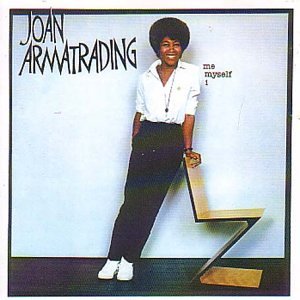
Joan Armatrading - Me, Myself, I (1980)

Joan Armatrading is a British singer, songwriter and guitarist. She is a member of the Order of British Empire (MBE). Joan was awarded her MBE at Buckingham Palace in 2001 from Prince Charles.  She began her career in music in the early 70's when she performed in a stage production of the musical "Hair". "Me, Myself, I" is her 8th studio album released in May 1980 (so far she has released 21 albums).

Her previous albums were more along the lines of folk oriented confessional songs. In 1980 she hired Richard Gottehrer to produce a rock edged sound for her. Gottehrer had produced albums for Blondie and the Go-Go's.The album featured Anton Fig on drums (he's from David Letterman's house band), Chris Spedding on guitar, Clarence Clemons on saxophone, Paul Shaffer (Saturday Night Live, David Letterman) on keyboards as well as other well known musicians.

"Me, Myself, I" went on to become Armatrading's best selling album in both the UK and U.S. The title track was released as a single and reached #21 in the UK and received a fair amount of radio airplay in the U.S. The second single release was "All The Way From America".


The Cult - Love (1985)


 The Cult is a British rock band which formed in 1983. Lead singer Ian Astbury had formed the Southern Death Cult in 1981. The band was very short lived and disbanded in early 1983. Astbury than formed The Cult which went on to achieve mulit-platinum success. 
"Love" was their 2nd studio album and was released on October 18, 1985. This is the album which brought The Cult commercial on the worldwide music scene. It reached #4 in the UK and #87 in the U.S. and was certified Gold in both countries. The album has been described as equal parts psychedelic, hard rock and new wave goth. 

The songs on this album emanate a bright guitar sheen, tight arrangements, crisp drumming and an outstanding performance by vocalist Ian Astbury.

The first single from the album, "She Sells Sanctuary", widened their following in the UK reaching #15 and was the start of their popularity in the U.S. The song has been covered by several artists including the British band Keane. The intro to the song was used in a Nissan commercial a few years back.

The second single "Rain" followed in the success of "She Sells Sanctuary" and reached 317 on the UK singles chart. for a brief period of time (during recording) the song was known as "Sad Rain". The lyric is inspired by a Hopi rain dance.

Containing great rock riff and big choruses, "Revolution" was the 3rd single from the album. It reached 330 in the UK.

"Big Neon Glitter" was one of the album's more popular album tracks garnering huge airplay in both the UK and U.S. In the U.S. it was played on alternative music and album oriented FM radio such as the popular KROQ. With it's U2-like guitar intro "Glitter" was probably more popular in the states than any of their singles.

"Love" is one of those few albums in music history which has aged very well and sounds better today than it did in it's original release. Every song is outstanding with "Nirvana", "Brother Wolf, Sister Moon", "Phoenix" and "Hollow Man" also being highlights.


Florence + the Machine - Lungs (2009)


It's rare to see an artists debut album garner as much attention as Florence + The Machines "Lungs" has. From 2009 to 2011 the album and the artist have received countless award nominations throughout the world. Some of the awards they've won include 2009's Critics Choice (Brit Awards), Best Breakthrough Artist of 2009 (UK Festival Awards), Mastercard Album of 2010 (Brit Awards), Best International Band (2010 Meteor Music Awards), Best Female (2010 Q Awards), Best Newcomer (2010 European Festival Awards) and several other wins. It's easy to say "Lungs" touched on the pulse of a generation of music listeners.

I mulled over this album for several weeks before buying it. I wasn't sure if this would be my "cup of tea". I didn't want to buy it and get it home and hear something like Britney Spears or Selena Gomez. Fortunately I was pleasantly surprised at the depth of the music and the inbred soul in Florence's powerful voice. her voice is somewhere in the league of Joss Stone meets Janis Joplin meets Kate Bush but quite a bit more refined and versatile. Florence has a bright future ahead of herself.

"Lungs" is Florence + The Machine's first (and so far only) album released on July 6, 2009. the album has sold extremely well throughout the world reaching #1 in the UK, #2 in Ireland, #3 in Australia, #3 in New Zealand, #8 in Portugal, #14 in the U.S. and chart positions in several other countries in the world. Thus far the album has received gold and platinum certifications in 9 different countries throughout the world.

The album has spawned 8 singles (one of them being a remix of "You've Got The Love" called "You Got The Dirtee Love". Her biggest hits worldwide are "Dog Days Are Over" and "You've Got The Love".

"You've Got The Love" is only one of two songs on the album not written or co-written by Florence Welch. The song (written by Anthony B. Stephens) was originally titled "You Got The Love" and was recorded in 1986 by Candi Staton (and her band The Source). In 2008 Joss Stone recorded the song for her album "Colour Me Free". Finally it was Florence + The machine that brought this soulful tune to international prominence. Florence first released the song in December 2008 as the b-side to her single "Dog Days Are Over". The song was quickly released as a digital only download single in January 2009 when it began gaining more attention than it's A-side. Finally in November 2009 the song was officially released as single (along with a music video) and stormed up the charts around the world.

Another highlight on the album is "Cosmic Love". Florence said "Cosmic Love" was a joke title which ended up sticking. She wrote this song after having been at a party and drinking far too much). The song just wasn't working out and then she hit on one note )on the paino) and the rest came together. they ended up writing the song in about a half hour. Many critics have praised the song calling it the best track on the album.

"Rabbit Heart (Raise It Up)" featured Florence's voice overdubbed with so many harmonies that she sounds like a massed choir of one. In an interview with The Independent in June 2009 Florence commented that Cenzo Townshend (the guy who mixed the song) nearly had a nervous breakdown. The track includes elements of "House Jam" by Gang Gang Dance who originally were not credited on the album but since have been added to the album credits as well as receiving royalties. "Rabbit Heart" was written after her label asked her for something more upbeat, but ended up with a chorus about ritual sacrifice. In an interview for Steve Lamacq on his BBC Radio In New Music We Trust show, she explained: "I've been doing all this heavy dark stuff and I just wanted something to express that sort of joyful sort of side to the music. But then again once I started doing that, the lyrics started getting dark again and then it became all about like ritual sacrifice and like who is the lamb and who is the knife? And I think it was just all about me about to jump into the limelight and being in the music industry stuff like that. But it is sort of joyful in a way because its all about giving yourself up and letting it go and you start off being a sort of timid rabbit heart and you have to become courageous and become a lion heart."


Moody Blues - Days Of The Future Passed (1967)


What makes an album a classic? There are many aspects that make an album a classic. A set of great songs that the music listening public can get a hold of and relate to. Musical arrangements that are intense and precisely crafted. An overall theme that resonates in the heart of the culture of a universal community. A timelessness in the songs that only sound better as time progresses. There are many factors involved and Moody Blues' "Days Of The Future Passed" possesses many of these elements and much more.

"Days of the Future Passed" was The Moody Blues' 2nd studio album and the first to include lead singer Justin Hayward and bassist John Lodge. Hayward and Lodge were instrumental in shaping the sound of which Moody Blues became famous.

The album sold extremely well throughout the world and reached #27 in the UK in 1967/68. It wasn't until 1972 (after the re-release of "Nights In White Satin" as a single) that the album took off in the U.S.  when it reached #3 on the Billboard chart and experienced a minor resurgence in the UK.

The album was an epic work of art using the London Festival Orchestra to create otherworldly instrumental interludes between the songs. The album flowed together in a simple concept tracing an "everyman's day" from dawn to night, from awakening to sleep.

The London Festival Orchestra was a fictitious orchestra of musician assembled expressly for the recording of the album. The orchestral parts were performed separately and edited between and around the Moody Blues parts, so the orchestra did not actually accompany the group.

The English musical arranger, conductor and composer Peter Knight was employed to orchestrate the album. Before working with The Moody Blues Knight produced numerous vocal scores and eventually assembled his own orchestra called The Peter Knight Orchestra. it was his richly textured orchestration on "Days of the Future Passed" that brought him to international acclaim. Knight built the orchestral parts around themes written by The Moody Blues.

The first single released from the album was the classic "Nights In White Satin". In it's original 1967 release the song hit #19 in the UK and soared all the way to #1 in the Netherlands. In 1972 the song was re-released and it was then that it hit the status of "classic" reaching #9 in the UK, #1 in Canada and #2 in the U.S.

"Nights In White Satin" was written by Justin Hayward in 1965 at the age of 19. He got the idea for the song after someone gave him a set of white satin sheets. Hayward told the Daily Express Saturday magazine May 3, 2008: "I wrote our most famous song, 'Nights in White Satin' when I was 19. It was a series of random thoughts and was quite autobiographical. It was a very emotional time as I was at the end of one big love affair and the start of another.

The second single was "Tuesday Afternoon" which did not fare as well only reaching #12 in the UK and #24 in the U.S. Regardless the song is still considered a classic. The song gets it's unusual sounds from the use of the mellotron,  which is a keyboard that triggers taped loops of a chosen instrument recorded at different pitches.  Justin Hayward wrote the song originally intending to name it "Tuesday Afternoon". At the insistence of producer Tony Clarke, it was named "Forever Afternoon (Tuesday?)" for its release on Days of Future Passed. However, when it was released as a single a year later, its name was changed back to "Tuesday Afternoon", and it has been more commonly known by this name ever since. Some of the Moody Blues compilation and live albums list the song as "Tuesday Afternoon (Forever Afternoon)" to reflect both titles. Hayward wrote this song on a beautiful spring afternoon, in a field near his home in England, after he smoked a funny African cigarette, the song just came to him.


Raphael Saadiq - The Way I See It (2008)


Raphael Saadiq reaches back to old school R&B classics such as the Stylistics, Temptations and Stevie Wonder to craft his appealing blend of music. Listening to any one of his albums one might think it's a long lost Stylstics album finally being released. He stays true to the genre.

"The Way I See It" is Saadiq's 3rd studio album. It was released by Columbia records on September 16, 2008 and sold fairly well throughout the U.S. and parts of Europe. It charted at #19 in the U.S., #15 in France, #24 in Finland and #69 in Belgium.

There were six singles released from the album and although not one of them charted on the Top 100 Billboard Singles chart several of them made it on to the R&B chart with the biggest hit being "Never  Give You Up" (featuring Stevie Wonder on harmonica and CJ Hilton on vocals). CJ Hilton is a 22 year old R&B singer who's main influence is Marvin Gaye. Hilton shared lead vocals and co-wrote the song with Saadiq. The song reached #26 on the U.S. R&B chart (and #4 on the U.S. adult R&B chart). The song also received a Grammy award nomination for Best R&B Performance by a Duo or Group with Vocals.

Saadiq's approach to producing his music is refreshing. In a time period when many current R&B artists use synthesizers and stripped down bass and beat Saadiq employees a full band complete with horn players, guitarists, keyboards and the full spectrum of musicality. It's like Earth, wind and fire meets Smokey Robinson. 

Saadiq first came to fame in the 80's as a member of the neo-soul group Tony! Toni! Toné. then followed that up in the 90's with R&B supergroup Lucy Pearl (which included members from En Vogue and A Tribe Called Quest). Finally in 2002 he released his first solo album.

"Love That Girl" was the album's second biggest hit reaching #45 on the U.S. R&B chart (and #13 on the U.S. adult R&B chart). On his website Saadiq commented on the song: "Man, that's all about the swing... the way girls swing their hips! It's the type of song that will make people move and that shuffle beat reminds me of those ladies I used to see playing drums in church!". "Love That Girl" was also nominated for a Grammy award in the Best Traditional R&B Vocal Performance category.

Along with the two Grammy nominations for "Never Give You Up" and "Love That Girl", the album was nominated for Best R&B Album. Due to the success of "The Way I See It" Saadiq got a Soul Train Award nomination for  Best R&B/Soul Male Artist.


Siouxsie and the Banshees -  Kaleidoscope (1980)


Released on August 1, 1980 "Kaleidoscope" was Siouxsie and the Banshess 3rd studio album and their first to breakout throughout other parts of the world outside of England. The album reached #5 in the UK (their first out of two UK Top 10's), #10 in Switzerland, #30 in New Zealand and #66 in Australia.

Following the departure of Kenny Morris (drummer) and John McKay (guitarist), the band regrouped and shifted the focus of their sound. Budgie (Big In Japan, The Slits) joined the band in late 1979 on drums and guitarist extraordinaire John McGeoch (Magazine, Visage) joins in early 1980. They experimented with synth based electro-dance sounds.

The album was released to immediate critical praise. Many critics dubbed the album a classic. Allmusic's David Cleary described it as a "strong record" with "extraordinarily imaginative production values featuring intricate synthesizer-flecked arrangements; psychedelic touches in "Christine," spaceship synthesizer swoops in "Tenant," and rhythmic camera clicks in "Red Light" all enliven their respective songs".

Two singles were released from "Kaleidoscope" although the album achieved chart success in various areas in the world the two singles only charted in the UK. The first single "Happy House", with a chilling beat and John McGeoch's classic atmospheric guitar riff, made it into the UK top 20 reaching #17.

The second single "Christine" begins with a distinctive riff played on an acoustic guitar. The chorus is topped with synthesizers and psychedelic touches throughout. The close of the song utilizes a strong flanging effect. The song was inspired by the story of Christine Costner-Sizemore, whose battle with dissociative identity disorder was dramatized in the film The Three Faces of Eve. Two of Christine's identities, the Strawberry Girl and the Banana Split Lady, are mentioned in the lyrics of the song. The two most extreme characters of this woman were named "Eve White" and "Eve Black" : that is the title of the B-side recorded for that single. Bassist/composer Steve Severin wrote the lyrics that told of the 22 personalities that had at the time emerged throughout Christine's life. This song reached #22 on the UK singles chart and was played heavily in underground clubs in greater metropolitan sections such as Los Angeles, New York City, Orlando and their neighboring areas.


Billy Squier - Don't Say No (1981)


"Don't Say No" was Billy Squier's 2nd studio album released on April 13, 1981. The album performed extremely well on the U.S. Billboard Top 200 Albums chart. It reached #5 and stayed on the chart for an amazing 111 weeks. By 1992 "Don't Say No" was certified triple platinum for selling over 3 million copies (in the U.S.).

Many music critics considered this to be a solid hard rock album and several FM rock radio stations would play the entire side one on rock block weekends. In the days of vinyl albums side one consisted of "In The Dark", "The Stroke", "My Kinda Lover", "You Know What I Like" and "Too Daze Gone". The songs "Lonely Is The Night" and "Don't Say No" also received rock radio airplay.

The first single released from the album was the classic "The Stroke" was a hit worldwide and reached #17 in the U.S., #7 in Canada and #52 in the UK,  #3 in Austria and #32 in new Zealand. It also reached #3 on the U.S. rock tracks chart. Squier admits a Queen influence in this song, and Queen's guitarist Brian May was at one point slated to produce the album. When May backed out because of scheduling conflicts, Reinhold Mack, who produced Queen's album The Game, stepped in. The distinctive drum sound was created by recording the snare drum backwards and playing it just ahead of the real drum. Despite popular belief, according to Squier "The Stroke" is about the music industry.

The album's 2nd single "In The Dark" with it's spiraling guitar chords barely made the U.S. Top 40 peaking at #35 but it received extensive rock radio airplay and reached #7 on the Rock Tracks chart. "In The Dark" was a great opening song to the album and features fat guitar riffs and rockin' drum work. The song is considered a rock music classic.

The 5th single from the album "My Kinda Lover" reached #45 on the U.S. singles chart and was released after it had already been receiving extensive rock radio airplay for the better part of a year.


LinkWithin

Related Posts Plugin for WordPress, Blogger...