Tuesday, July 26, 2011

Rock Albums Post Five

Joan Armatrading - Me, Myself, I (1980)
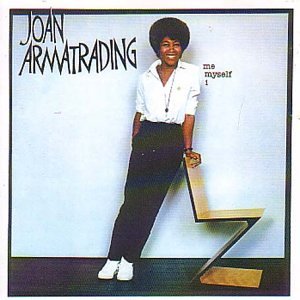
Joan Armatrading is a British singer, songwriter and guitarist. She is a member of the Order of British Empire (MBE). Joan was awarded her MBE at Buckingham Palace in 2001 from Prince Charles.  She began her career in music in the early 70's when she performed in a stage production of the musical "Hair". "Me, Myself, I" is her 8th studio album released in May 1980 (so far she has released 21 albums).

Her previous albums were more along the lines of folk oriented confessional songs. In 1980 she hired Richard Gottehrer to produce a rock edged sound for her. Gottehrer had produced albums for Blondie and the Go-Go's.The album featured Anton Fig on drums (he's from David Letterman's house band), Chris Spedding on guitar, Clarence Clemons on saxophone, Paul Shaffer (Saturday Night Live, David Letterman) on keyboards as well as other well known musicians.

"Me, Myself, I" went on to become Armatrading's best selling album in both the UK and U.S. The title track was released as a single and reached #21 in the UK and received a fair amount of radio airplay in the U.S. The second single release was "All The Way From America".


The Cult - Love (1985)


 The Cult is a British rock band which formed in 1983. Lead singer Ian Astbury had formed the Southern Death Cult in 1981. The band was very short lived and disbanded in early 1983. Astbury than formed The Cult which went on to achieve mulit-platinum success. 
"Love" was their 2nd studio album and was released on October 18, 1985. This is the album which brought The Cult commercial on the worldwide music scene. It reached #4 in the UK and #87 in the U.S. and was certified Gold in both countries. The album has been described as equal parts psychedelic, hard rock and new wave goth. 

The songs on this album emanate a bright guitar sheen, tight arrangements, crisp drumming and an outstanding performance by vocalist Ian Astbury.

The first single from the album, "She Sells Sanctuary", widened their following in the UK reaching #15 and was the start of their popularity in the U.S. The song has been covered by several artists including the British band Keane. The intro to the song was used in a Nissan commercial a few years back.

The second single "Rain" followed in the success of "She Sells Sanctuary" and reached 317 on the UK singles chart. for a brief period of time (during recording) the song was known as "Sad Rain". The lyric is inspired by a Hopi rain dance.

Containing great rock riff and big choruses, "Revolution" was the 3rd single from the album. It reached 330 in the UK.

"Big Neon Glitter" was one of the album's more popular album tracks garnering huge airplay in both the UK and U.S. In the U.S. it was played on alternative music and album oriented FM radio such as the popular KROQ. With it's U2-like guitar intro "Glitter" was probably more popular in the states than any of their singles.

"Love" is one of those few albums in music history which has aged very well and sounds better today than it did in it's original release. Every song is outstanding with "Nirvana", "Brother Wolf, Sister Moon", "Phoenix" and "Hollow Man" also being highlights.


Florence + the Machine - Lungs (2009)


It's rare to see an artists debut album garner as much attention as Florence + The Machines "Lungs" has. From 2009 to 2011 the album and the artist have received countless award nominations throughout the world. Some of the awards they've won include 2009's Critics Choice (Brit Awards), Best Breakthrough Artist of 2009 (UK Festival Awards), Mastercard Album of 2010 (Brit Awards), Best International Band (2010 Meteor Music Awards), Best Female (2010 Q Awards), Best Newcomer (2010 European Festival Awards) and several other wins. It's easy to say "Lungs" touched on the pulse of a generation of music listeners.

I mulled over this album for several weeks before buying it. I wasn't sure if this would be my "cup of tea". I didn't want to buy it and get it home and hear something like Britney Spears or Selena Gomez. Fortunately I was pleasantly surprised at the depth of the music and the inbred soul in Florence's powerful voice. her voice is somewhere in the league of Joss Stone meets Janis Joplin meets Kate Bush but quite a bit more refined and versatile. Florence has a bright future ahead of herself.

"Lungs" is Florence + The Machine's first (and so far only) album released on July 6, 2009. the album has sold extremely well throughout the world reaching #1 in the UK, #2 in Ireland, #3 in Australia, #3 in New Zealand, #8 in Portugal, #14 in the U.S. and chart positions in several other countries in the world. Thus far the album has received gold and platinum certifications in 9 different countries throughout the world.

The album has spawned 8 singles (one of them being a remix of "You've Got The Love" called "You Got The Dirtee Love". Her biggest hits worldwide are "Dog Days Are Over" and "You've Got The Love".

"You've Got The Love" is only one of two songs on the album not written or co-written by Florence Welch. The song (written by Anthony B. Stephens) was originally titled "You Got The Love" and was recorded in 1986 by Candi Staton (and her band The Source). In 2008 Joss Stone recorded the song for her album "Colour Me Free". Finally it was Florence + The machine that brought this soulful tune to international prominence. Florence first released the song in December 2008 as the b-side to her single "Dog Days Are Over". The song was quickly released as a digital only download single in January 2009 when it began gaining more attention than it's A-side. Finally in November 2009 the song was officially released as single (along with a music video) and stormed up the charts around the world.

Another highlight on the album is "Cosmic Love". Florence said "Cosmic Love" was a joke title which ended up sticking. She wrote this song after having been at a party and drinking far too much). The song just wasn't working out and then she hit on one note )on the paino) and the rest came together. they ended up writing the song in about a half hour. Many critics have praised the song calling it the best track on the album.

"Rabbit Heart (Raise It Up)" featured Florence's voice overdubbed with so many harmonies that she sounds like a massed choir of one. In an interview with The Independent in June 2009 Florence commented that Cenzo Townshend (the guy who mixed the song) nearly had a nervous breakdown. The track includes elements of "House Jam" by Gang Gang Dance who originally were not credited on the album but since have been added to the album credits as well as receiving royalties. "Rabbit Heart" was written after her label asked her for something more upbeat, but ended up with a chorus about ritual sacrifice. In an interview for Steve Lamacq on his BBC Radio In New Music We Trust show, she explained: "I've been doing all this heavy dark stuff and I just wanted something to express that sort of joyful sort of side to the music. But then again once I started doing that, the lyrics started getting dark again and then it became all about like ritual sacrifice and like who is the lamb and who is the knife? And I think it was just all about me about to jump into the limelight and being in the music industry stuff like that. But it is sort of joyful in a way because its all about giving yourself up and letting it go and you start off being a sort of timid rabbit heart and you have to become courageous and become a lion heart."


Moody Blues - Days Of The Future Passed (1967)


What makes an album a classic? There are many aspects that make an album a classic. A set of great songs that the music listening public can get a hold of and relate to. Musical arrangements that are intense and precisely crafted. An overall theme that resonates in the heart of the culture of a universal community. A timelessness in the songs that only sound better as time progresses. There are many factors involved and Moody Blues' "Days Of The Future Passed" possesses many of these elements and much more.

"Days of the Future Passed" was The Moody Blues' 2nd studio album and the first to include lead singer Justin Hayward and bassist John Lodge. Hayward and Lodge were instrumental in shaping the sound of which Moody Blues became famous.

The album sold extremely well throughout the world and reached #27 in the UK in 1967/68. It wasn't until 1972 (after the re-release of "Nights In White Satin" as a single) that the album took off in the U.S.  when it reached #3 on the Billboard chart and experienced a minor resurgence in the UK.

The album was an epic work of art using the London Festival Orchestra to create otherworldly instrumental interludes between the songs. The album flowed together in a simple concept tracing an "everyman's day" from dawn to night, from awakening to sleep.

The London Festival Orchestra was a fictitious orchestra of musician assembled expressly for the recording of the album. The orchestral parts were performed separately and edited between and around the Moody Blues parts, so the orchestra did not actually accompany the group.

The English musical arranger, conductor and composer Peter Knight was employed to orchestrate the album. Before working with The Moody Blues Knight produced numerous vocal scores and eventually assembled his own orchestra called The Peter Knight Orchestra. it was his richly textured orchestration on "Days of the Future Passed" that brought him to international acclaim. Knight built the orchestral parts around themes written by The Moody Blues.

The first single released from the album was the classic "Nights In White Satin". In it's original 1967 release the song hit #19 in the UK and soared all the way to #1 in the Netherlands. In 1972 the song was re-released and it was then that it hit the status of "classic" reaching #9 in the UK, #1 in Canada and #2 in the U.S.

"Nights In White Satin" was written by Justin Hayward in 1965 at the age of 19. He got the idea for the song after someone gave him a set of white satin sheets. Hayward told the Daily Express Saturday magazine May 3, 2008: "I wrote our most famous song, 'Nights in White Satin' when I was 19. It was a series of random thoughts and was quite autobiographical. It was a very emotional time as I was at the end of one big love affair and the start of another.

The second single was "Tuesday Afternoon" which did not fare as well only reaching #12 in the UK and #24 in the U.S. Regardless the song is still considered a classic. The song gets it's unusual sounds from the use of the mellotron,  which is a keyboard that triggers taped loops of a chosen instrument recorded at different pitches.  Justin Hayward wrote the song originally intending to name it "Tuesday Afternoon". At the insistence of producer Tony Clarke, it was named "Forever Afternoon (Tuesday?)" for its release on Days of Future Passed. However, when it was released as a single a year later, its name was changed back to "Tuesday Afternoon", and it has been more commonly known by this name ever since. Some of the Moody Blues compilation and live albums list the song as "Tuesday Afternoon (Forever Afternoon)" to reflect both titles. Hayward wrote this song on a beautiful spring afternoon, in a field near his home in England, after he smoked a funny African cigarette, the song just came to him.


Raphael Saadiq - The Way I See It (2008)


Raphael Saadiq reaches back to old school R&B classics such as the Stylistics, Temptations and Stevie Wonder to craft his appealing blend of music. Listening to any one of his albums one might think it's a long lost Stylstics album finally being released. He stays true to the genre.

"The Way I See It" is Saadiq's 3rd studio album. It was released by Columbia records on September 16, 2008 and sold fairly well throughout the U.S. and parts of Europe. It charted at #19 in the U.S., #15 in France, #24 in Finland and #69 in Belgium.

There were six singles released from the album and although not one of them charted on the Top 100 Billboard Singles chart several of them made it on to the R&B chart with the biggest hit being "Never  Give You Up" (featuring Stevie Wonder on harmonica and CJ Hilton on vocals). CJ Hilton is a 22 year old R&B singer who's main influence is Marvin Gaye. Hilton shared lead vocals and co-wrote the song with Saadiq. The song reached #26 on the U.S. R&B chart (and #4 on the U.S. adult R&B chart). The song also received a Grammy award nomination for Best R&B Performance by a Duo or Group with Vocals.

Saadiq's approach to producing his music is refreshing. In a time period when many current R&B artists use synthesizers and stripped down bass and beat Saadiq employees a full band complete with horn players, guitarists, keyboards and the full spectrum of musicality. It's like Earth, wind and fire meets Smokey Robinson. 

Saadiq first came to fame in the 80's as a member of the neo-soul group Tony! Toni! Toné. then followed that up in the 90's with R&B supergroup Lucy Pearl (which included members from En Vogue and A Tribe Called Quest). Finally in 2002 he released his first solo album.

"Love That Girl" was the album's second biggest hit reaching #45 on the U.S. R&B chart (and #13 on the U.S. adult R&B chart). On his website Saadiq commented on the song: "Man, that's all about the swing... the way girls swing their hips! It's the type of song that will make people move and that shuffle beat reminds me of those ladies I used to see playing drums in church!". "Love That Girl" was also nominated for a Grammy award in the Best Traditional R&B Vocal Performance category.

Along with the two Grammy nominations for "Never Give You Up" and "Love That Girl", the album was nominated for Best R&B Album. Due to the success of "The Way I See It" Saadiq got a Soul Train Award nomination for  Best R&B/Soul Male Artist.


Siouxsie and the Banshees -  Kaleidoscope (1980)


Released on August 1, 1980 "Kaleidoscope" was Siouxsie and the Banshess 3rd studio album and their first to breakout throughout other parts of the world outside of England. The album reached #5 in the UK (their first out of two UK Top 10's), #10 in Switzerland, #30 in New Zealand and #66 in Australia.

Following the departure of Kenny Morris (drummer) and John McKay (guitarist), the band regrouped and shifted the focus of their sound. Budgie (Big In Japan, The Slits) joined the band in late 1979 on drums and guitarist extraordinaire John McGeoch (Magazine, Visage) joins in early 1980. They experimented with synth based electro-dance sounds.

The album was released to immediate critical praise. Many critics dubbed the album a classic. Allmusic's David Cleary described it as a "strong record" with "extraordinarily imaginative production values featuring intricate synthesizer-flecked arrangements; psychedelic touches in "Christine," spaceship synthesizer swoops in "Tenant," and rhythmic camera clicks in "Red Light" all enliven their respective songs".

Two singles were released from "Kaleidoscope" although the album achieved chart success in various areas in the world the two singles only charted in the UK. The first single "Happy House", with a chilling beat and John McGeoch's classic atmospheric guitar riff, made it into the UK top 20 reaching #17.

The second single "Christine" begins with a distinctive riff played on an acoustic guitar. The chorus is topped with synthesizers and psychedelic touches throughout. The close of the song utilizes a strong flanging effect. The song was inspired by the story of Christine Costner-Sizemore, whose battle with dissociative identity disorder was dramatized in the film The Three Faces of Eve. Two of Christine's identities, the Strawberry Girl and the Banana Split Lady, are mentioned in the lyrics of the song. The two most extreme characters of this woman were named "Eve White" and "Eve Black" : that is the title of the B-side recorded for that single. Bassist/composer Steve Severin wrote the lyrics that told of the 22 personalities that had at the time emerged throughout Christine's life. This song reached #22 on the UK singles chart and was played heavily in underground clubs in greater metropolitan sections such as Los Angeles, New York City, Orlando and their neighboring areas.


Billy Squier - Don't Say No (1981)


"Don't Say No" was Billy Squier's 2nd studio album released on April 13, 1981. The album performed extremely well on the U.S. Billboard Top 200 Albums chart. It reached #5 and stayed on the chart for an amazing 111 weeks. By 1992 "Don't Say No" was certified triple platinum for selling over 3 million copies (in the U.S.).

Many music critics considered this to be a solid hard rock album and several FM rock radio stations would play the entire side one on rock block weekends. In the days of vinyl albums side one consisted of "In The Dark", "The Stroke", "My Kinda Lover", "You Know What I Like" and "Too Daze Gone". The songs "Lonely Is The Night" and "Don't Say No" also received rock radio airplay.

The first single released from the album was the classic "The Stroke" was a hit worldwide and reached #17 in the U.S., #7 in Canada and #52 in the UK,  #3 in Austria and #32 in new Zealand. It also reached #3 on the U.S. rock tracks chart. Squier admits a Queen influence in this song, and Queen's guitarist Brian May was at one point slated to produce the album. When May backed out because of scheduling conflicts, Reinhold Mack, who produced Queen's album The Game, stepped in. The distinctive drum sound was created by recording the snare drum backwards and playing it just ahead of the real drum. Despite popular belief, according to Squier "The Stroke" is about the music industry.

The album's 2nd single "In The Dark" with it's spiraling guitar chords barely made the U.S. Top 40 peaking at #35 but it received extensive rock radio airplay and reached #7 on the Rock Tracks chart. "In The Dark" was a great opening song to the album and features fat guitar riffs and rockin' drum work. The song is considered a rock music classic.

The 5th single from the album "My Kinda Lover" reached #45 on the U.S. singles chart and was released after it had already been receiving extensive rock radio airplay for the better part of a year.


Thursday, July 14, 2011

Rock Albums Post IV: Smart Music Part I

This is Part One in a continuing series


Battles - Gloss Drop (2011)


Battles is an experimental rock group from New York City. Their music includes fragments of Math Rock and Prog Rock all bundled in their own uniquely creative sound. "Gloss Drop" was released on June 6, 2011. The album has reached #98 in the U.S. and #48 in the UK. "Gloss Drop" is the 2nd studio album released by Battles.

"Gloss Drop" is primarily an instrumental album with a guest vocalists singing on four of the tracks. The lyrics are minimalist at best and don't really dig in as deep as the music. It's the music here that challenges the mind and stimulates our intellect. "Gloss Drop" is music's equivalent to a 3D movie. The music is flexed out in all areas. It jumps out of your media player right into your very existence. The music takes on it's own life in the way your mind processes this auditory treat. The music is artfully and skillfully performed with a measure of beauty meets urgency and an underlying sense of dry humor. 

"Sundome" hints of reggae blended into layers of keyboards, echoing voices and a myriad of sounds. Midway through the tempo changes and the song takes on a prog feeling pop rhythm with the many various sounds intertwining and meeting with captivating effect.

In it's complexity "Inchworm" delivers a punch and rhythm that simply delights the listener into the passion of the music yet keeping it all somewhat distant and dark wrapped in a sunshiny sort of mania.

"Ice Cream" sports a witty yet very understated sense of humor. It's a dry sort of humor which may not be realized by most listeners. I especially love the organ sounding effects added to the mix which is full of a multi-layer of finely tunes bings, bangs, bells, whistles and chimes. The song fills the mind with layers of music while entertaining the body with rhythm and beat. The lead vocal is performed by Chilean singer Matias Aguayo.

My favorite track on the album is "My Machines". There are many reasons I like this song but the most prominent is Gary Numan supplying the lead vocal. He has always been a huge favorite of mine and still is to this day. The song starts with a propulsive unrelenting waterfall of percussion and a funk-filled bass line which really drives the song. Numan's lyrics speak of the inner mind of dreams and taking a look inside of them. Like the other songs on the album, the lyrics are vague and minimal, but in this case do have a deeper meaning. Numan brings a force to the album which adds to an already near perfect album of songs which each have the strength to stand on their own.

In the end the album brings a sense of jubilation only captured if you're paying attention to the layers of emotion spread throughout the music.  


Bright Eyes - The People's Key (2011)

"The People's Key", the 7th studio album by Bright eyes was released on February 15, 2011 (band founder, Connor Oberst's 31st birthday). The album sold well in the U.S. reaching #13 and also #38 in Canada, #46 in the UK and #55 in Australia. 

In this album Oberst ponders the existence of faith and science as an intermingling unit or force. The brings forth his thoughts and ideas forth in a relaxed soundscape of sincere beats and electrified keyboards, guitars and bass. 

"A Machine Spiritual (In The People's Key)" brings forth an alien sort of earth in which all it's inhabitants walk through life on autopilot. Their life is relegated to It's a sort of we all get a little to comfortable in our lives and take advantage of it. Connor Oberst explained in an interview with NME; "It's the idea of when in the not so distant future, artificial intelligence surpasses human intelligence and humanity as a notion is just kind of quaint".

Opening with a crunchy guitar line "Haile Selassie" speaks to the heart of freedom from evil and liberation from darkness. Haile Selassie was the Ethiopian Emporer from 1930 - 1974. He was considered a messiah in the Rastafarian movement of the New Golden Age. it was believed that Selassie would lead followers into the realm of the new day of light. Although Oberst does not follow the tenets of Rastafarianism, he does believe that their are forces of good and evil in this world. Oberst encourages the growth of love, peace and human equality.

"Shell Games" finds Oberst confronting his evil way. he talks about change and putting away the selfish and flashy ways. Oberst is ready to come down to earth and face reality - real life. He reaches out for a loving hand to share. He's opening his doors to the inclusion of others in life. There's an emptiness in life which we will never overcome alone.

"The People's Key" is a bright fresh breath of hope and introspection wrapped in smart electric infused acoustic sounds. Bright eyes offers today a new breed of folk fused pop music. It's thoughtful with a good catchy beat.


Brian Eno - Here Come The Warm Jets (1974)


After recording two albums with Roxy Music Eno released his debut solo album, "Here Come The Warm Jets",in January 1974. At this point in time Eno already had the reputation of taking synthesized electronic sounds to a new level. With this album he cemented his reputation and diverged into many different aspects of the music world. 

"Here Come The Warm Jets" showcases the deeper thoughts and complex humor that lives inside the intellect of Brian Eno. He wrapped his intellect inside some of the decades most enticing rock music sounds. Probably the most captivating aspect in Eno's music is his element of chance. While his music is intricately produced and arranged he will throw a curve ball and leave an instrumental interlude to chance in it's progression. Eno let's his music take on it own life throughout the process. His music not only contains his own personal touch but also an element in which the music becomes that of the listener. The listener not only identifies with Eno's music but becomes part of the music itself. Eno has infused so many layers and complexities in his music that it becomes an extension or another dimension of the creators and the listeners of the music.

The album was only a minor success on the charts reaching #26 in the UK and #151 in the U.S. The album's biggest success came from the buzz created by numerous positive reviews from music critics throughout the world.

Several guest musicians performed on the albim including John Wetton and Robert Fripp (both from King Crimson), Simon King (Hawkwind), Bill MacCormick (Matching Mole), Paul Rudolph (Pink Fairies), Chris Spedding and Phil Manzanera, Andy Mackay and Paul Thompson (all three from Roxy Music). 

The title track "Here Come The Warm Jets" ponders the emptiness of life. The longing to be somewhere or something. The heavy layered music support the lyrical theme by foreshadowing with dark cloudy sounds of emotion through the condensed and precisely mixed instrumentation. 

"Baby's On Fire" has become one of the album's main highlights. The song opens with a foreboding bass line that would fit perfectly in a James Bond chase scene. The coolly works into a dazzling frizzle of musical electronics. Eno's vocal performance accents the music in an understated yet macabre way.  It's Rocky Horror meets prog rock (this was a year before Rocky Horror made it's debut). Critics have noted Robert Fripp's guitar solo as an outstanding feature of the song. 

In 1973 Eno split from Roxy Music due to Bryan Ferry's dominance and authority with the band. He wrote the song "Dead Finks Don't Talk" as a slight (yet pungent) jab at Ferry, using terms such as "naughty sneaky" and "oh perfect master" in the song's lyrics. The song displays the intensity of Eno's humor combined with his anger for Ferry. Though the songs lyric is grim the music itself has a happy sort of feel to it giving it the irony which Eno felt during his time with Roxy Music.

"Blank Frank" is my favorite tune from this album. I like it for it's aggressiveness. Eno growls his words out with an attitude of doom and despair. The song speaks of an always present danger. A darkness which forever lurks.  The first musical solo (about 1 minute into the song) features a Robert Fripp guitar solo sounding quite a bit like a machine gun. This effect conjures thoughts and visions of social unrest and world dominating wars. This could be reflective of a person (an emotion or feeling) that has experienced some sort of life changing trauma. 

Eno did not write light cheerful pop tunes for that perfect sunny summer day (oh, how I love those perfect pop tunes of the 70's). Instead Eno wrote songs which challenged the mind. Songs which caused a bit of discomfort. He touched on feelings and thoughts that others generally stayed away from. After the mental challenges, the social awkwardness and eye opening, Eno gives his unfailing gratitude and artistry over to the music and to those who take the time to dig a bit deeper into his creations.


Joy Division - Unknown Pleasures (1979)


Joy Division was an English post-punk band which formed in 1976. They released their debut album "Unknown Pleasures" in June 1979. The buzz was huge for Joy Division. Although the album did not sell very well it did manage to reach #1 in New Zealand and critics rated this one of the 100 best albums of 1979. The future held quite a bit for Joy Division. But, fate prevailed and the life of Joy Division was cut short on May 18, 1980 when lead singer Ian Curtis committed suicide. Only 2 months before the release of their second studio album "Closer". 

"Unknown Pleasures" has gone on to become a post-punk classic. The mood is bleak, clouded and somber. The songs speak of doom, disaster and despair without any real chance of hope or redemption.

In an article on allmusic Ned Ragget states as much as this producer Martin Harnett's album it's the songs and performances that are the true key. Bernard Sumner redefined heavy metal sludge as chilling feedback fear and explosive energy, Peter Hook's instantly recognizable bass work at once warm and forbidding, Stephen Morris' drumming smacking through the speakers above all else. Ian Curtis synthesizes and purifies every last impulse, his voice shot through with the desire first and foremost to connect. 

"New Dawn Fades" pictures a man who's hopes are shot down by his desire of wanting more and feelings of never being satisfied. Moby recorded an excellent cover of the song in 1995 for the movie soundtrack "Heat". 

In 2007 the Killers recorded a version of the song "Shadowplay", which was used in the movie "Control" and is played during the credits of the film. The Killers also released the song as a single to promote their 2007 compilation titled "Sawdust".

"She's Lost Control" is one of Joy division signature tunes and was the inspiration for the title of the 2007 biopic referencing lead singer Ian Curtis' life and death. This song is about the vulnerabilities of living in confusion with no escape. Not knowing whether you're alive or dead. The song is driven by bassist Peter Hook's prominent yet minimalist bass line structured with Stephen Morris' mechanical perfectly syncopated percussion. "She's Lost Control" is like walking into an expansive winding tree lined forest during the darkest night of the year. If you get lost there's no way back home.

In a dark tone singer Ian Curtis sings his feelings of lost control. In the song "Disorder", he has a hold of one part of his life but has lost control of another part. 


The Mars Volta - Frances The Mute (2005)


"Frances The Mute" is the Mars Volta's 2nd studio album and was released on March 1, 2005. The mars Volta's first album "Deloused in the Comatorium opened the door for the band with "Frances the Mute" they experienced global success. The album is their first and only to achieve GOLD status in the U.S. and reached #4 on the U.S. Billboard chart (this is their 2nd highest charting album). In the UK the album made it to #23 and is their highest charting UK album. In New Zealand the album reached #21. It also reached the Top 20 in several European countries including #1 in Norway. 

Many fans consider the Omar Rodriquez-Lopez produced album to be The Mars Volta's best work. The album is full of out of this world guitar work and a mesh of music that inspire and moves the listener. The Mars Volta is not your average rock band - they are one of the "best of the best" and belong in the ranks of artists as Pink Floyd, Led Zeppelin, the Doors, Jimi Hendrix and all the other great and influential rock bands. 

The album contains 3 pieces which I call suites. The first is the four part "Cygnus.. Vismund Cygnus". Cygnus, the blind and deaf mute, follows a world in which reality is the illusion. The world is looked at through the lens of birth and death. It's lyrics are poetic in a dark and detached manner. The second suite is "Miranda That Ghost Just Isn't Holy Anymore", which is also written in four parts. With"Miranda" The Mars Volta creates it's own world in which human and inhuman meet. Again the topics of life and death arise. The Mars Volta questions our mortality. Flea (Red Hot Chili Peppers) steps in to play the trumpet on the "Miranda" suite. The crowing jewel in this album is the five part "Cassandra Gemini". The band performs beyond all expectations on this suite. The subject in this song experiences the feeling of losing his (or her) identity or way in this world. The person experiences a sense of feeling lost and out of touch. This suite has a fascination with breaking the skin, whether it's piercing, stabbing or biting the skin, they speak of blood and death (or maybe the living dead or life after death). The topic can be debatable, but that is how The Mars Volta styles their songs - they leave an element up to the listener to decide how they interpret the meaning of the songs.

"The Widow"is the album's highlight track. The song was released as a single The song was dedicated to Jeremy Michael Ward (a founding member of The Mars Volta) who died of a heroin overdose in May 2003. Released as a single, "The Widow", reached #95 on the U.S. billboard singles chart as well as #20 in the UK. This is the only Mars Volta song to make it on any charts in the U.S.

Much of the inspiration for "Frances The Mute" came from a journal which Jeremy Michael Ward found while he was working in the repossession business in Los Angeles. 


Rush - Grace Under Pressure (1984)


This album is about pressure and how people react under different kinds of pressure. 

"Grace Under Pressure" is Rush's 10th studio album (released April 12, 1984) and their 4th after their shift from hard rock to progressive rock. With this album Rush took the opportunity to further experiment in melding different genres to form a fresh forward leaning sound. They took elements of ska, pop and synth rock and fused them with in their prog rock framework. 

"The Enemy With In" is about how fear works inside our minds and bodies. It's Neal Peart's look inside his own soul. The ska influenced guitar chords drive the song into a frenzy of intensity. This song is part one of the Fear Trilogy (which as of 2002 is a quadrilogy). Part 3 of the Fear Series, "Witch Hunt" was the first to be released in 1981 on the album "Moving Pictures". Part 2 was "The Weapon" from 1982's "signals" album. "The Enemy with In" is part yet released third. In 2002 Rush added to the trilogy with "Freeze" included on their album "Vapor Trails".

"The Body Electric" describes a robot who struggles to break free from the growing dominance of the robots' social structure. The theme of this song seems to have some influence from the George Lucas film THX1138.

Lyricist Neal Peart states that the lyrics in "Red Sector A" intentionally evokes imagery of the concentration camps during the Holocaust. The lyric, "I clutch the wire fence until my fingers bleed", intensifies the pain felt by the prisoners of war. Peart fashioned the lyrics so as to relate to any similar prison camp scenario.

"Afterimage" was written in tribute to Robbie Whelan, a friend of the band (most prominently Neal Peart) who worked as an assistant engineer on some of Rush's earlier albums, most notably "Moving Pictures". Robbie died in an accident on his way to Le Studio (in Quebec) where he worked.


Talking Heads - Remain In Light (1980)


Released on October 8, 1980 "Remain In Light" (Talking Heads' 4th studio album) is the third in a trilogy of Talking Heads albums produced by the legendary Brian Eno.

The album was released to instant critical acclaim garnering praise from almost every rock critic on the music scene. The album ended up in many critics "best of"list. Michael Kulp (The Daily Collegian) stated the album deserves the tag "Classic" attached to it like each of the band's three previous full length albums. Ken Tucker of Rolling Stone Magazine commented the album was full of songs to which you can dance and think, think and dance, dance and think in to an infinity.

During the months of recording this album the process lagged as David Byrne was struggling with writer's block and Chris Frantz and Tina Weymouth were busy with the Tom Tom Club. It looked like momentum on the album stopped and it was wondered if it would be completed. At the request of Byrne, Harrison and Eno guitar virtuoso and musician extraordinaire Adrian Belew joined the band. Belew was brought in to add guitar solos by using his unique Roland guitar synthesizer. Even at this early stage Belew's resume was quite impressive having worked with Frank Zappa and David Bowie in the previous few years. The band's enthusiasm rebounded after Belew joined in and recording of the album accelerated.

Belew's inclusion spiked the band's sound and added to the overall effect. Belew shined throughout the entire projected but most prominently on the song "The Great Curve".  The song's lyric is greatly influenced by the African culture as Byrne has cited Robert Farris Thompson's book "African Art In Motion" and John Dean's testimony to African American former slaves during the Watergate trials in the 1970's. Byrnes interest in African art rings through in the chant-like vocals and enmeshed polyrhythms. Belew gives us one of his finest guitar solos taking the song to a dramatic and grand end with his synthesized and electrifying treatment. As an extra added bonus Robert Palmer was brought in to play bongos.

David Byrne has stated that the song "Once In A Lifetime" is meant to be taken literally. He's said, "We're largely unconscious. You know, we operate half awake or on autopilot and end up, whatever with a house and family and job and everything else, and we haven't really stopped to ask ourselves, 'How did I get here?'." The song only reached #103 on the U.S. singles chart, but made it to #14 in the UK and #16 in Ireland. 

Funky bass with soulful African rhythms and beats drive "Houses In Motion" as well as Adrian Belew's ever present synthesized guitar work. The musical interludes include a tasty blending of Jon Hassell's electronically manipulated trumpet performance and Belew's altered guitar sounds topped with a fantastic percussion section. "Houses In Motion" was the album's 2nd single and received a fair amount of rotation in the underground club scene. 

As started with the song "I Zimbra" from 1979's "Fear Of Music, the Talking Heads scored their 2nd (and biggest of 3) U.S. Dance Club hit with "Crosseyed and Painless" which reached #20 on the Billboard Dance Music chart. Their 3rd dance club hit was 1985's "And She Was". Byrne's influence for this funk-filled song comes from old school rappers especially Kurtis Blow's "The Breaks".


U2 - War (1983)


With "War" U2 was still at the beginnings of what turned out to be a magnificent career which has endured through 4 decades now. "War" drew upon the direction which was finely honed on their 2nd album "October". Their musical ability and vision evolved far beyond anybodies expectations. U2 proved musically that they were ready to stand with the greats of all-time. This time around with their Released on February 28, 1983, "War" is U2's 3rd studio album. 

"War" has the interesting distinction of having knocked Michael Jackson's "Thriller" out of the #1 spot on the UK album chart, only to give the spot back to Jackson the following week. It was their first UK #1 as well as being their first Top 15 album in the U.S. reaching #12. The album was certified quadruple platinum for sales of more than 4 million in the U.S.

The album opens on a very strong note with "Sunday Bloody Sunday" and continues from there victoriously and thrillingly right to the end of the album. The opening militaristic machine-gun drumwork helped set the pace and theme of the song. Denise Sullivan commented for AllMusic that Larry Mullen's opening drumwork "helps set the tone for the unforgiving, take no prisoners feel of the song as well as for the rest of the album". In the U.S. the song received a large amount of radio airplay on album oriented FM radio. It made it's biggest impact in the Netherlands where it reached #3 on the singles chart. 

"New Year's Day" is the song that started the fast paced explosion into rock and roll super-stardom. This was their first song to make it into the Top 20 in more countries than their 2 previous albums and was the start of an international boom of popularity. The song became an anthem of freedom and love to fans around the world. The song is a blending of a love song and a commentary on the Polish Solidarity movement.

As with all the songs on "War", "Two Hearts Beat As One" is driven by Adam Clayton's propulsive and affective bassline. The song moves with an intensity of anguish, confusion and love. Bono wrote the lyric while on his honeymoon in the Caribbean.


Tuesday, June 28, 2011

Rock Albums Post Three / 1979

This post features albums released in 1979...

1979  was a great year in music with albums by groups such as Led Zeppelin, Michael Jackson, The Cars, Donna Summer, Supertramp, Styx, Tom Petty and the Heartbreakers and many other favorites. Rock music was once again in a transition period. Classic Rock (which was still very much alive) was sharing the spotlight with New Wave, an increasingly popular new sub-genre and hybrid of rock, punk and dance music. Groups such as Blondie,  Talking Heads, The Cure, The Cars, Gary Numan and others were beginning to make a huge impression on the face of popular music.

Each album is given a rating ranging from 1 star to 10 stars 
(10 stars is the best) 
Please add your comments and ratings on each album


The Cars - Candy-O 
Released in June 1979 exactly one year after the release of their hugely successful debut album the Cars continued in a trend of success. Their second album hinted more at an electronic KROQ new wave style while their first album featured a classic rock sound.

Candy-O, like their debut, featured  female on the album cover. This cover was painted by Alberto Vargas, an artist known for his paintings of pin-up girls which showed up in Esquire and Playboy magazines from the 40's to the 60's. The model who posed for the painted coincidentally was named Candy.

With Candy-O the Cars proved they were not a one hit wonder. The album reached #3 on the US chart as well as #6 in New Zealand and #7 in Australia it also hit #30 in the UK.

The first single from the album was the classic "Let's Go", which was written by Ric Ocasek and featured lead vocals by the band's bassist Benjamin Orr. The song was a huge hit in many countries around the world reaching #14 in the U.S., #5 in Canada and #6 in Australia. The song featured a signature clapping sound which was derived from a 1962 instrumental called "Let's Go" recorded by the Routers. The second single "It's All I Can Do" wasn't quite as successful on the charts but was certainly a big favorite by fans of the Cars and AOR music listeners. This song is described as a romantic new rock ballad. The third single "Double Life" failed to chart but received heavy airplay on classic rock radio stations across the U.S.. This song featured the lead vocal of Ric Ocasek with backing vocals by the entire band. "Double Life" embraces a fresh modern rock sound as it's lyric speaks of the alienation of infidelity in a relationship. "Lift me from the wondermaze, alienation is the craze".

Besides the three singles the albums also features several outstanding album cuts including "Since I Held You", "Candy-O", "Nightspots", "Lust For Kicks", "Got A Lot On My Head" and "Dangerous Type" - all of which received a good amount of airplay on classic rock and new wave radio stations.
Rock Music Rating: 9 stars


Eagles - The Long Run
After releasing five consecutive album one right after the other it took the Eagles 3 long years to record and release "The Long Run". Released on September 24, 1979 the album reached #1 in the U.S. and stayed their for 8 weeks. It dethroned Led Zeppelin's "In Through The Out Door" (of which you can read later in this post). The album also reached #1 in Australia, Canada and Sweden. It was Top 5 in Norway, New Zealand and the UK.

The track "The Geeks Don't Want No Freaks" included Jimmy Buffett on backing vocals.  The moody "Sad Cafe" featured jazz musician David Sanborn playing saxophone.

The album included three U.S. top ten hits with "The Long Run", the ballad "I Can't Tell You Why" and the classic "Heartache Tonight". The latter of which went #1. "In The City", "Sad Cafe" and "Those Shoes" also received radio airplay on classic rock stations.

"Heartache Tonight" won a Grammy Award for Best Rock Vocal Performance by a Duo or Group. This was their fourth out of six Grammy Awards.
Rock Music Rating: 8 1/2 stars 


Electric Light Orchestra - Discovery
"Discovery" was a big hit worldwide charting in Japan, New Zealand, Italy, Austria and Canada as well as reaching #1 in the UK, Austrailia and Norway. In the U.S. the album made it up to #5.

Released in May 1979 their were five singles released from the album. The first was "Shine A Little Love", contained a bit of a disco beat and gave ELO a huge boost in universal sales. The song reached the Top Ten in 8 different countries around the world including #1 in Poland and Canada. In the UK the song reached #6 and in the U.S. #8.

The second single was the big sounding "Don't Bring Me Down", which ended up being ELO's biggest worldwide hit (barring movie songs and/or duets). It charted in the Top Ten in 12 countries around the world, which is more than any of their other songs. The song placed the best in Australia and Canada where it reached #2 and in the UK it was #3. In the U.S. the song made it to #4 becoming their biggest U.S. hit.

The third single didn't fare to well. "The Diary of Horace Wimp" was a curious song obviously influenced by the Beatles with the added electronic technology of the late 70's. The song was patterned after one of their hits from 1978 "Mr. Blue Sky". Despite it's catchy feel good sound the song failed to catch on in most parts of the world, although it did hit #8 in Ireland and #10 in England.

The fourth single "Confusion" brought ELO back into the Top 20 throughout many countries around the wrold. By the time the fifth single, "Last Train To London" was released the album had run it's course and the song did not chart in many countries although fared well in France reaching #3 there. It also reached the Top Ten in the UK and Ireland. In the U.S. the song just squeezed into the Top 40 at #39.

The song "On The Run" received a fair amount of classic rock radio airplay and could have been a single had there not already been five releases.

As with other ELO releases the album featured an entire orchestra including instruments such as cello and violin. The orchestral and choral arrangements were composed by Jeff Lynne, Richard Tandy and Louis Clark . Clark also conducted the orchestra. Louis Clark is best remembered for his "Hooked On Classics" albums released in the early 80's.
Rock Music Rating: 7 1/2 stars


Journey - Evolution
In 1979 Journey was just on the brink of taking an already hugely successful career into worldwide super-stardom with in the next 2 and 3 years. 

"Evolution" brought Journey their first legitimate U.S. hit single with "Lovin' Touchin', Squeezin'". The album was their first to chart in the UK reaching #100.

"Lovin', Touchin', Squeezin'" was written by Steve Perry and was influenced by Sam Cooke's 1962 classic "Nothing Can Change This Love". "Lovin', Touchin', Squeezin'" hit #16 in the U.S. as well as #6 in Canada and #37 in New Zealand.

"Just The Same Way" was the album's first single release but did not chart so well. It reached #58, but still showed an upward progression in the records sales and chart positions. "Just The Same Way" was co-written by Journey band members Gregg Rolie, Neil Schon and Ross Valery. The leads vocals were shared by Gregg Rolie and Steve Perry.

"Too Late" was a third single that showed poorly on the charts but received a good amount of classic rock radio airplay.

"City of the Angels" was a highlight from the album which some claim may be the album's strongest track. The song received radio airplay on FM classic rock station throughout the U.S. and Canada.

With Steve Perry now firmly fronting the band, "Evolution", their fifth studio album,  found Journey sounding stronger and more focused then ever. They incorporated many elements of romance and radio friendly hooks in the album's songs. This was the prototype for future albums such as "Departure", "Escape" and "Frontiers".
Rock Music Rating: 8 stars


Tom Petty and the Heartbreakers - Damn The Torpedos
"Damn The Torpedoes" was one of those albums that became part of the culture of many rock music listeners. Each song contained the electric power of the current music of the day, yet with a sense of going back to roots in rock with hints of country and blues. The album felt comfortable from first listen and became a staple at most house parties throughout 1979 and 1980.

Their 3rd studio album, "Damn The Torpedoes", was Tom Petty and the Heartbreakers U.S. breakthrough having reached #2 (for seven weeks) and selling over 2 million copies.   Pink Floyd's "The Wall" kept Petty from reaching #1. The album was released on October 19, 1979.

The first single "Don't Do Me Like That" received heavy rotation on FM classic rock radio including KROQ, KLOS and KMET as well as some Top 40 radio.  The song reached U.S. #10 and generated enthusiastic interest and strong sales for the album. Tom Petty was firmly poised for worldwide super-stardom.

Two other singles "Refugee" and "Here Comes My Girl" both received heavy airplay and reached #15 and #59 respectively. "Refugee" became an anthem of sorts with it chant like chorus..."Everybody's had to fight to be free. You see, you don't have to live like a refugee".  The song gave a feeling of freedom and release for those locked up in the torments of love.

"Even The Losers", "Shadow of a Doubt (A Complex Kid)", "Century City"  and "Louisiana Rain" all received critical acclaim as well as heavy airplay on album oriented rock stations.
Rock Music Rating: 10 stars


Pink Floyd - The Wall

1973's "Dark Side of the Moon" was a turning point for Pink Floyd, both in sales and musical growth. "The Wall" released on November 30, 1979 became a classic upon it's release. This was their crowning moment. It just didn't get any better than this. It went on to become one of the Top 30 biggest selling albums worldwide having sold over 30 million copies to date.

The album  delivered a theme of isolation and loneliness in it's songs. Pink Floyd asked Is there anybody out there? Was this a cry for help. In the song "Another Brick In The Wall", the author (Roger Waters) is tormented by his schooling in 1950's Britain. The school was extremely controlling and as Waters said, rebellion was needed. To escape the loneliness Waters built a wall around himself.

"Another Brick In The Wall (Part Two)" was released and the song immediately rose to #1 in more than ten different countries around the world as well as Top 3 in several others. The song brought out a sense of unity as the chorus shouts "we don't need no education". It was a means of speaking out against discipline as a means of control. The North London Islington Green School students provided the school choir type vocals. The choir included 23 kids aged 13 to 15. They were overdubbed 12 times to give them a larger and haunting choral sound.

Two other singles were subsequently released "Run Like Hell" and "Comfortably Numb". Both received heavy airplay while "Comfortably Numb went on to become an all-time classic and has been covered by many acts including radically re-arranged Bee Gees disco styled version which reached #10 in the UK in 2004 by Scissor Sisters.

Roger Waters vision was that of a momentous musical experience. The result was well beyond the band's wildest expectations. The album was one in which multitudes of people felt a type of identification in the philosophical statements in the album. It was a connection with the dark side of loneliness and isolation.

Many musicians from various musical genres participated in the making of the album. Bruce Johnston (Beach Boys and Rip chords), Toni Tennille (Captain and Tennille) both contributed background vocals in a few songs. Lee Ritenour (guitar) and Jeff Porcaro (Toto, drums ) were only a few of many uncredited musicians who participated in the recording of "The Wall".

The double album, Pink Floyd's 11th studio album includes many classic tracks such as "Mother", "Goodbye Blue Sky", "Young Lust", "Hey You", "Is There Anybody Out There" and "In The Flesh".

The album is created to be listened to as an album instead of a set of individual songs - although each song holds up well on it's own strength and as a thematic whole.

In 1982 the spectacular British film, "The Wall", which incorporated live action and animation was released and based on the classic 1979 album "The Wall". All the songs from "The Wall" were featured in the movie with the exception of "Hey You" and "The Show Must Go On".
Rock Music Rating: 10 stars


The Police - Regatta de Blanc
Preceded by the single release "Message In A Bottle" the release of "Regatta de Blanc" was emphatically anticipated. "Message In A Bottle" was the perfect teaser for the upcoming album. The song had all the trademarks of classic written all over it. A chant like chorus. A message of a cry out for help, a plea to be noticed. Right from the opening guitar chords the song hits on strong and keeps a driving momentum with Stewart Copeland's always fantastic drum work. The song was a huge European hit reaching #1 in England, Ireland and 32 in the Netherlands. In the U.S. it didn't fare as well, it only reached #74, but received very strong radio airplay and became a classic Police track.

One month later, in October 1979, "Regatta de Blanc" was released to a welcome reception. The album flew to #1 in the UK, Australia, France and the Netherlands. As well as reaching #3 in Canada and #4 in New Zealand. The U.S. seemed to be the hard sell, the album fared decently reaching U.S. #25 and eventually sold over a million copies. The album recharted on the U.S. billboard chart at #153 in 1983, after the release of "Synchronicity". This was the Police's 2nd studio album.

The reggae influenced "Walking On The Moon" was the second single and it sold just a s well as "Message In A Bottle" with the exception of not charting in the U.S. The video for the song was filmed at the Kennedy Space Center and features footage from NASA.

The instrumental "Regatta de Blanc" brought the Police their first Grammy Award for Best Rock Instrumental Performance. This was their first of 6 total Grammy Awards wins.

The song "Bring On The Night" was written about the execution of Gary Gilmore who was found guilty of robbing and murdering two men in Utah. He was executed by a firing squad on January 17, 1977.

Five of the eleven songs were written by Sting. Stewart Copeland wrote 3. Copeland and Sting co-wrote one song together, while the last two were written by the entire trio of Sting, Copeland and Summers.
Rock Music Rating: 8 1/2 stars


Supertramp - Breakfast In America
"take a look at my girlfriend. she's the only one I got," echoed the halls of many high school campuses and college age dorm parties. Supertramp's 6th studio album, "Breakfast In America", was their peak both commercially and artistically.  The album reached #1 in seven countries arround the world including Canada, Australia and the U.S., where it stayed at #1 for six weeks.

Several of the songs on the album are played on a wurlitzer electric piano, creating a distinctive sound. The album's first single "The Logical Song" was driven by this sound. Right from the very opening of the song the Wurlitzer is prominently featured and is a dramatic constant throughout until the end. "The Logical Song" was released a month and a half after the album's March 29th release. The song was an instant hit commanding heavy airplay in both the U.S. and UK, where it reached #6 and #7 respectively.

The second single, "Breakfast In America", didn't do as well in the U.S. reaching only #64, but became a staple on classic rock radio. In the UK it reached #9.

"Goodbye Stranger", the album's third single, took Supertramp back into the U.S. top 15 reaching #15, but only made it to #57 in the UK. It was somewhat a reversal of the chart history of their previous single. This song, like the others, is supported by the Wurlitzer and propels forward with electric guitar and rhythmic bass lines in the chorus.

The band decided to release a fourth single, which was somewhat uncommon during this time. Three singles from one album was the industry norm. Though as we moved into the 80's four to five singles from an album became commonplace. The fourth single was the classic "Take The Long Way Home, which was already well known both from it's inclusion on the phenomenally successful "Breakfast In America" and from the heavy airplay it had already received at this point in time. Despite the fact the song brought Supertramp back into the U.S. Top Ten reaching #10, though it did not chart in the UK. It did however reach #9 in Germany.

"Breakfast In America" won two Grammy Awards. One for Best Recording Package and the other for Best Engineered Album, Non Classical. The album was nominated for Album of the Year but lost out to Billy Joel's "52nd Street".
Rock Music Rating: 8


 Talking Heads - Fear Of Music
This was the second of three Talking Heads albums produced by the maestro Brian Eno. Eno brought Robert Fripp (of King Crimson fame) to play guitar on "I Zimbra". During this time Eno was also working with David Bowie and Devo. Eno was becoming a heavily sought after producer and musician.

"Fear Of Music" contained funk based rhythms which looped back and forth with electronic sounds constructed by Eno. Tina Weymouth (the band's bass guitarist) has commented that David Byrne has an insane but fantastic sense of rhythm.

The album was a minor but worldwide hit having charted in the Top 30 in the U.S., Canada, UK and New Zealand, where it reached #11.  Three singles were released as follows; "Life During Wartime", "I Zimbra" and "Cities". None of them charted well anywhere, but all of them became alt-rock classics and also garnered airplay in dance clubs. Talking Heads entered a new phase in their career - dance music.

"I Zimbra" was the first of three Talking Heads to place on the U.S. Dance chart reaching #28. "I Zimbra" capitalized on a prominent disco beat and funk filled bass lines which pushed the song forward to become an underground dancefloor classic. 

"Life During Wartime" is the prominent track on "Fear Of Music". The song is a grim look of a recruit on the front-line. Byrne's lyric speaks of gunfire, grave sites, roadblocks and disease. Byrne shouts out, "this ain't no party, this ain't no disco, this ain't no fooling around,"  (which became an anthem in the clubs and at house parties). In one round of the chorus Byrnes names Mudd Club and CBGB, both popular underground clubs in New York.

Critics have hailed "Fear Of Music" as one of rock music's finest moments. In a Rolling Stone Magazine review, John Pareles commented, "Fear of Music is often deliberately, brilliantly disorienting. " He continued to say, "The album is foreboding, inescapably  urban and obsessed with texture." Other critics described it as an unconventional rock release and praised the album's gritty weirdness.

In the Rough Guide to Rock published in 1979, Andy Smith commented that the album was a strong contender for Best Album 70's because it's "bristling with hooks, riffs and killer lines."
Rock Music Rating: 9 1/2


LinkWithin

Related Posts Plugin for WordPress, Blogger...